A different way forward in mental and emotional health.

The Center for AAIT expands access to Acceptance and Integration Training® (AAIT™), an approach developed by psychotherapist Melanie McGhee, LCSW, to help people work with the thoughts, emotions, images, and sensations that can keep painful experiences active in the present.

We train and support practitioners, advance the study of AAIT™, and help make this work more accessible to the people and communities they serve.

Practitioners supported. Communities strengthened.

Acceptance and Integration Training

A different way forward in spiritual, emotional and mental health.

The Center for AAIT expands access to Acceptance and Integration Training® (AAIT™), an approach developed by psychotherapist Melanie McGhee, LCSW, to help people resolve the thoughts, emotions, images, and sensations that can keep painful experiences active in the present.

We train and support practitioners, advance the study of AAIT™, and help make this work more accessible to the people and communities they serve.

Practitioners supported. Communities strengthened.

Begin Where You Are

Two ways into the work of AAIT™

For Therapists, Coaches & Spiritual Practitioners

Learn the method and deepen your clinical or guiding practice.

Explore structured training pathways—from AAIT™ Foundations to the Fellowship Training Group—and review the clinical research supporting the work.

For Individuals & Communities

Understand how AAIT™ works or connect with a practitioner.

Discover how Acceptance and Integration Training® resolves present-moment emotional charge without staying stuck in the story—or find a trained practitioner.

The human experience behind the story

People are more than the stories of what has happened to them.

Painful experiences can leave traces. Sometimes they show up as thoughts we cannot seem to stop thinking. Sometimes they live in the body as tension or unease, appear as images and memories, or surface in emotional reactions that feel bigger than the moment in front of us.

Understanding the story can help. Insight can help. And sometimes understanding why we feel the way we do still does not change what happens inside us when something gets triggered.

Acceptance and Integration Training begins there.

Rather than asking someone to simply think differently about an experience or repeatedly revisit its story, AAIT works with what is still charged in the present—the thoughts, emotions, images, and sensations connected to it. The aim is not to erase the past or deny what happened. It is to help what has been painful become more fully accepted and integrated, so the past has less power to automatically determine what happens next.

When we are less governed by automatic reactions, there is more room for steadiness, perspective, and choice.

Looking upward through tall pine trees into a clear blue sky, evoking open space and perspective

The human experience behind the story

People are more than the stories of what has happened to them.

Painful experiences can leave traces. Sometimes they show up as thoughts we cannot seem to stop thinking. Sometimes they live in the body as tension or unease, appear as images and memories, or surface in emotional reactions that feel bigger than the moment in front of us.

Understanding the story can matter. Insight can matter. And sometimes understanding why we feel the way we do still does not change what happens inside us when something gets triggered.

Acceptance and Integration Training begins there.

Rather than asking someone to simply think differently about an experience or repeatedly revisit its story, AAIT works with what is still charged in the present—the thoughts, emotions, images, and sensations connected to it. The aim is not to erase the past or deny what happened. It is to help what has been painful become more fully accepted and integrated, so the past has less power to automatically determine what happens next.

When we are less governed by automatic reactions, there is more room for steadiness, perspective, and choice.
A present-centered approach

What is Acceptance and Integration Training?

Acceptance and Integration Training (AAIT) is an integrative approach developed by Melanie McGhee, LCSW, through decades of clinical practice, study, teaching, meditation, and exploration of how people heal and change.

AAIT works with charged thoughts, emotions, images, and sensations rather than relying on story or insight alone. Through processes of acceptance and integration, practitioners help people relate differently to what is arising within them.

As emotional charge is integrated, there can be greater access to the inner steadiness and perspective from which more skillful choices become possible.

People are so much more than their stories.

AAIT™ is one way of helping people experince that possibility for themselves.
Go deeper into AAIT

Beyond insight into freedom

What if healing does not require staying inside the story?

Melanie's development of AAIT grew in part from a question that became increasingly important throughout her work: What happens when understanding the story is not enough?

A person may understand why something hurts. They may recognize where a pattern began. They may even have considerable insight into why they react the way they do—and still find themselves caught in the same reaction when life touches that tender place again.

AAIT approaches that moment differently.

Instead of assuming that someone needs another interpretation of their experience, the work invites attention to what is present now. What thought carries charge? What image appears? What emotion arises with it? What sensation is experienced in the body?

Those experiences can become material for acceptance and integration rather than problems that have to be pushed away, explained away, or solved through analysis or some kind of cognitive effort.

The possibility is not to live without difficult experiences, but to meet what is here without automatically being governed by it.

See how AAIT works
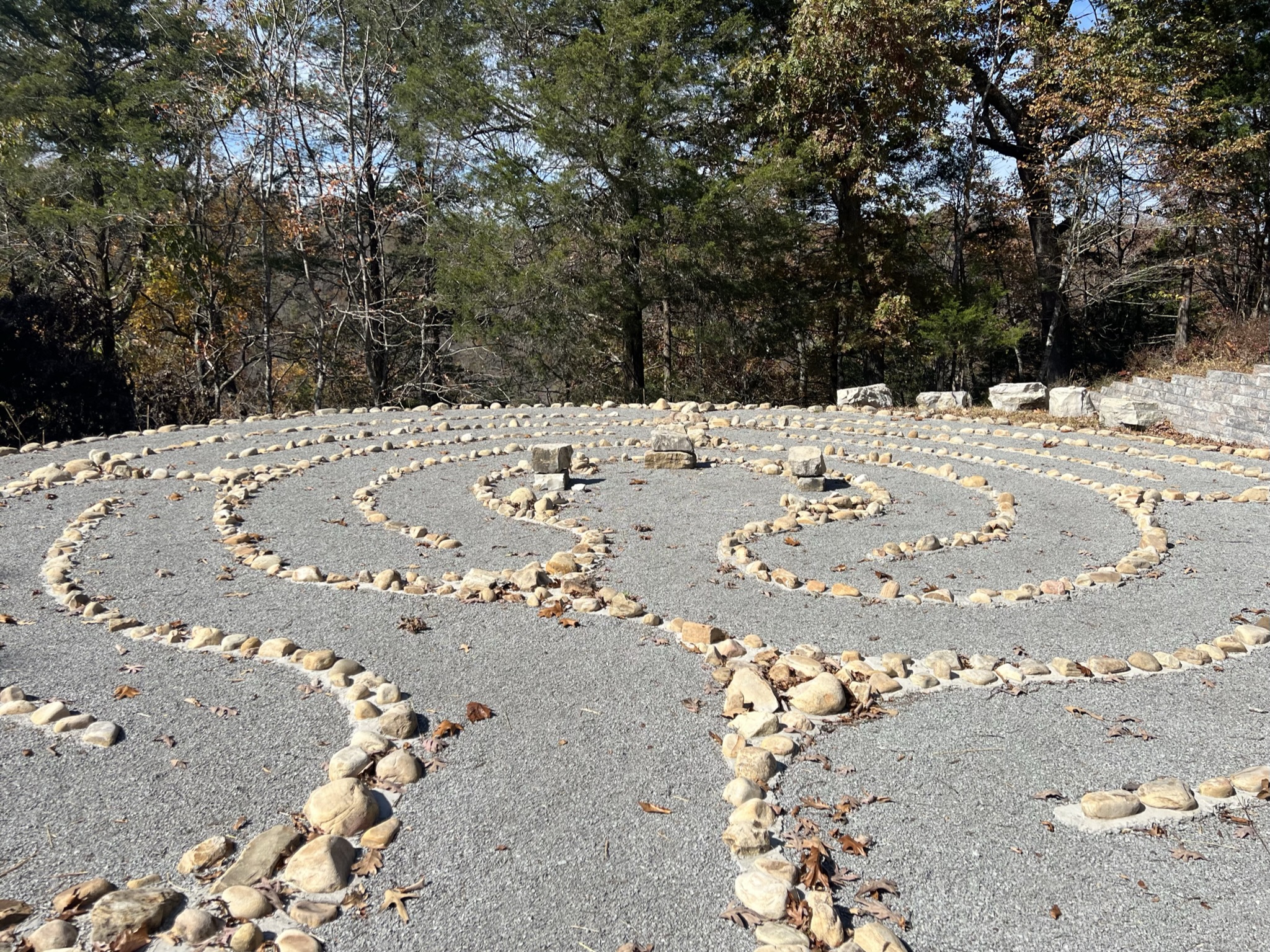
A winding stone labyrinth nestled beside quiet woodland trees, symbolizing unhurried inward inquiry and integration

How AAIT works

Change begins with what is happening now.

AAIT brings attention to the thoughts, emotions, images, and sensations that are carrying charge in the present moment.

Instead of requiring someone to push those experiences away—or remain caught inside them—the process creates an opportunity to meet what is arising with awareness and acceptance and to support its integration.

As that charge changes, something else can become available: more room between what happens and how we respond.

The movement of the work

Attention

Notice reactions that feel pain-filled or outside conscious control.

Acceptance and integration

Meet and resolve what arises rather than pushing it away.

Response space

Discover the space between stimulus and response - a space of steadiness, perspective, and choice.
It can mean greater steadiness when something difficult arises. More capacity to listen. More access to perspective. More freedom to choose a response instead of repeating an automatic one.

AAIT practitioners learn structured processes for supporting this work while staying within their appropriate professional scope.

Integration is not about becoming someone else. It can create more room to respond from who you already are.

How does AAIT work?
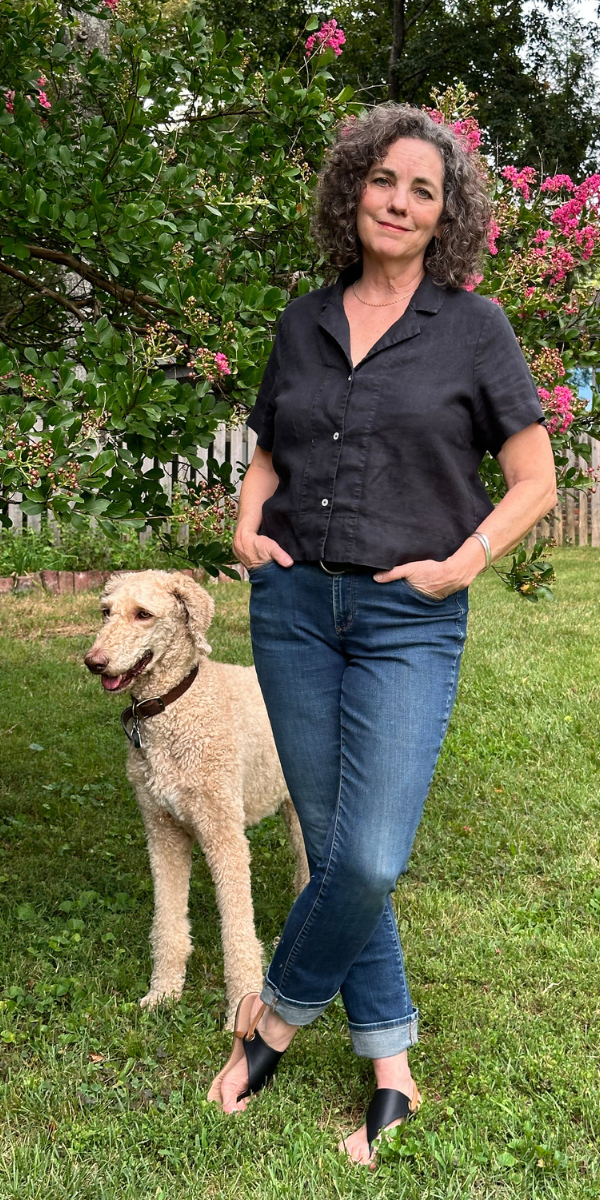
Portrait of Melanie McGhee, LCSW, developer of Acceptance and Integration Training
Melanie McGhee, LCSW, developer of Acceptance and Integration Training®

Origin and provenance

AAIT grew from a lifetime of practice, inquiry, and listening.

Melanie McGhee, LCSW, developed Acceptance and Integration Training® through decades of psychotherapy practice and an equally long commitment to understanding what helps people move through suffering toward greater freedom.

Her work has been shaped by extensive study with teachers and practitioners across therapeutic and contemplative traditions, including Ericksonian hypnosis, redecision therapy, self-acceptance training, and spiritual technology.

Her personal meditation practice and non-dual study has been steadfast since 1983, silently informing her practice of psychotherapy and transformation.

But AAIT did not emerge from theory alone.

It grew in the room with people.

Across nearly four decades as a psychotherapist, Melanie kept encountering the same human truth beneath very different stories: people could carry tremendous pain and still be far more than the experiences that had shaped them.

AAIT became a way of working directly with what remained charged while honoring the wholeness of the person experiencing it.

Meet Melanie McGhee

A supported learning pathway

Learn AAIT. Practice it. Deepen it.

AAIT training is experiential.

Practitioners don't simply learn concepts about acceptance and integration. They have opportunities to experience the processes, observe demonstrations, practice with others, ask questions, and develop greater confidence applying what they learn within their professional scope.

Begin

AAIT Foundations

Introduces the core principles and processes of the approach.

Deepen

Fellowship Training Group

Offers a deeper, multi-month learning experience for practitioners who want to develop greater fluency, personal integration, and professional application.

Together, these experiences create a pathway from introduction to deeper practice—supported by teachers, peers, and continued opportunities for learning.

Explore AAIT programs and training

Practitioner development

Supporting one practitioner can reach far beyond one person.

Therapists and helping professionals sit at an important point of connection.

What they learn does not stay in a classroom. It enters sessions, relationships, organizations, and communities through the people they serve.

That is why practitioner development is central to the work of the Center for AAIT.

The Center creates opportunities for practitioners to learn Acceptance and Integration Training®, deepen their skills, practice what they are learning, and remain connected to a community committed to thoughtful, compassionate care.

Sessions Relationships Organizations Communities

When practitioners have greater capacity to help, the impact can travel with them into every community they serve.

Explore AAIT training

Expanding access

Access to advanced learning should not depend only on who can afford it.

The Center for AAIT™ was created with a commitment to expanding access to meaningful practitioner development so that people that need it most have access to state-of-the-art care.

Scholarships help reduce financial barriers for eligible practitioners whose work reaches communities where resources for advanced mental-health training may be limited.

That creates two ways to participate in the same mission.

For practitioners

Continue your learning.

Practitioners can explore whether scholarship support may help them continue their learning.

Explore AAIT scholarships

For donors and sponsors

Donors and sponsors can help make that learning possible.

Help sponsor practitioner access

A scholarship does more than help fund a course. It can place new skills in the hands of a practitioner who carries them back into the lives and communities they already serve.

Research with integrity

Good questions deserve careful evidence.

The Center for AAIT™ is committed not only to teaching Acceptance and Integration Training®, but also to understanding it more deeply.

That means asking clear questions about how AAIT is being used, what practitioners and participants experience, what can be measured, and where further study is needed.

As the AAIT evidence base develops, the Center is working to bring research, source material, clinical inquiry, and future study into one transparent body of knowledge.

Research and evidence should help clarify what we know—not provide language for claims that outrun the data.

The goal is to keep learning what the evidence can genuinely tell us.

Explore AAIT research and evidence

From individual change to shared capacity

What changes in one person rarely stops with one person.

When someone has greater access to steadiness, perspective, empathy, and choice, that change can influence how they show up with the people around them.

The same is true for practitioners. A practitioner who feels more grounded and capable carries that presence into every relationship in which they serve.

This is part of the larger vision behind the Center for AAIT: supporting individual transformation while strengthening the capacity of the people and systems that care for others.

That is where the Center's commitment to mental-health equity becomes more than an idea. It becomes a question of who has access to skilled care, who has access to advanced learning, and how we help widen both.

Explore our impact

The organizational home of the work

The Center for AAIT™ carries the work forward.

The Center for AAIT™ is the nonprofit organization that teaches, supports, and expands access to Acceptance and Integration Training®.

Its work brings together practitioner education, scholarship access, research and inquiry, community connection, and the infrastructure needed to help AAIT continue developing responsibly.

Melanie McGhee developed AAIT™. Her company, Illumined Life, LLC holds the registered trademark for Acceptance and Integration Training® and licenses the work to the Center for AAIT™.

Practitioner educationScholarship accessResearch and inquiryCommunity connections
About the Center for AAIT

The human side of the work

The work becomes real in the lives it touches.

Methods matter. Training matters. Research matters.

And there is another kind of knowledge that matters too: what people experience when they bring the work into their lives, practices, and communities.

The Center is building a growing collection of practitioner, community, and supporter stories that show the human side of AAIT—not as proof that every person will have the same experience, but as a way of understanding how the work is being encountered and carried forward.

Every story adds another piece to the larger picture.

Explore stories from the AAIT community
Community connection and the human experiences behind the work of AAIT

Your next step

Where would you like to go next?

You don't have to understand the entire AAIT ecosystem before taking the next step.

If you are a practitioner, you can explore how AAIT works and where training begins.

If you are looking for support, you can learn about practitioners who have trained in AAIT.

If you are a researcher, clinician, educator, or simply curious about the method, you can go deeper into the principles, evidence, and developing body of knowledge.

And if you believe more practitioners should have access to meaningful training, you can help make that possible.

Understanding can begin in one place and lead somewhere entirely new.